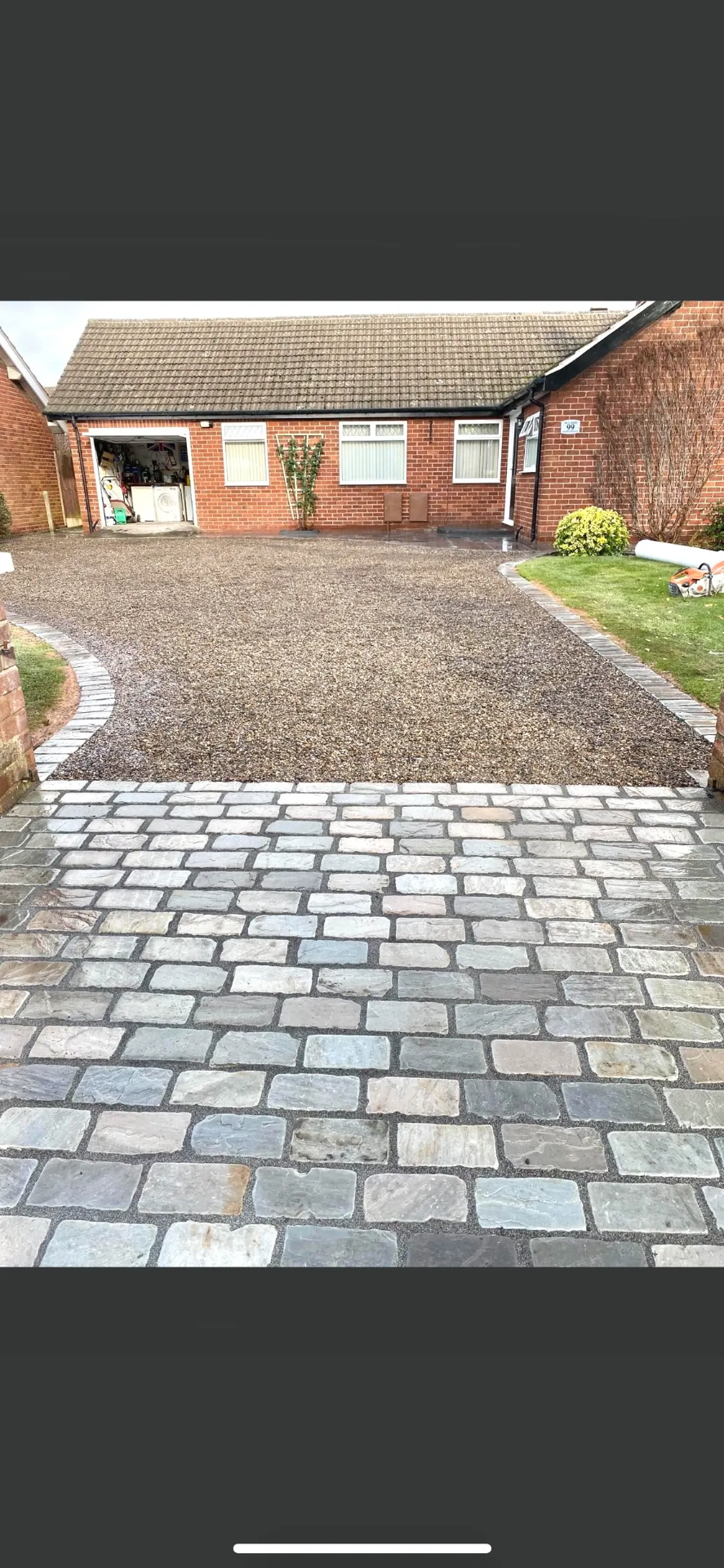
Driveways
Gravel Driveways in Guildford
A free-draining, characterful surface that suits period and rural Surrey properties — provided the ground beneath it is built to hold the stone still.
Gravel is the most misunderstood driveway surface in Guildford. Laid straight onto soil it rots into mud within two winters; laid on a compacted sub-base with proper edging and retention it is one of the longest-lived, lowest-cost surfaces you can buy.
Is gravel right for your property?
Gravel works best on longer approach drives, level or gently sloping frontages, and properties where a soft, traditional look matters more than a perfectly smooth surface. It is the natural fit for the village plots around Cranleigh, Shalford and Compton, and for period houses where resin or tarmac would look wrong against the brickwork.
It is less suited to steep gradients, where stone migrates downhill, and to homes where wheelchair access, pushchairs or bicycle use matter. On steeper sites we usually recommend either a bound gravel system or a block-paved wheel track through the gravel.
- Excellent natural drainage — usually no planning consent needed for surface water
- Lowest installed cost of any properly built driveway surface
- Audible security: nobody crosses gravel quietly
- Easy to top up and re-level rather than replace
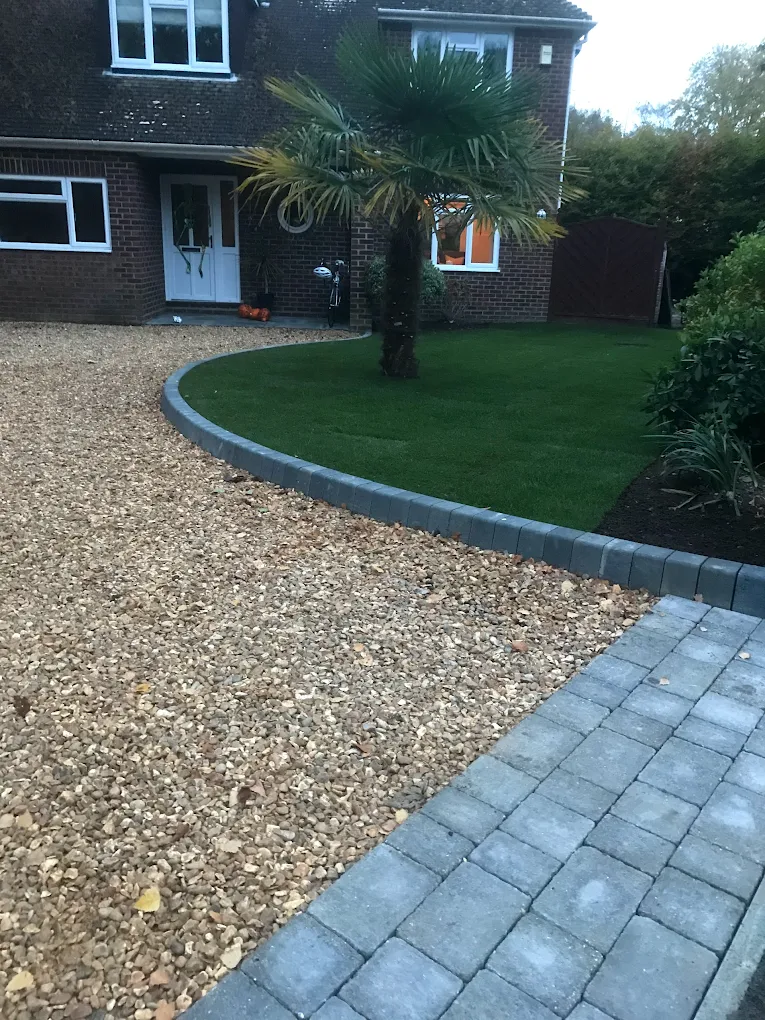
The build-up underneath
Every gravel driveway we install in Guildford is excavated to between 150mm and 250mm depending on ground conditions and whether vehicles will be heavier than a family car. Soft spots are dug out rather than bridged over.
A geotextile separation membrane goes down on the formation to stop the sub-base punching into the subsoil. MOT Type 1 is then laid and whacker-compacted in layers, and a second weed membrane sits above it, directly beneath the decorative stone. That second layer is what keeps weeds down and stops the gravel disappearing into the base.
Where a drive gets daily turning traffic we fit a cellular gravel grid on top of the sub-base and fill the cells with stone. It costs more up front, but it stops rutting and keeps the surface level for a decade or more.
Choosing the gravel
Angular 10–20mm stone knits together and stays put. Rounded pea shingle looks pretty in a photograph and then rolls under your tyres — we rarely recommend it for a driveway. Colour is worth choosing on site against your brickwork rather than from a brochure.
- Cotswold buff — warm and traditional, flatters Bargate stone and red brick
- Silver or Scottish granite — cool grey, sharp against modern render
- Flint and Breedon-style self-binding gravel — compacts to a firmer surface
- Golden quartz — bright, holds its colour when wet
Edging, retention and drainage
Gravel needs something to push against. We fit either a concrete-haunched block or kerb edge, timber or steel edging on informal drives, or a brick soldier course where the drive meets the house. Without it, the stone ends up on your lawn and in the road.
Because gravel drains through its own surface, most drives need no additional drainage. Where a drive falls towards the house or garage we still install a channel drain across the threshold, and where the sub-base sits on heavy Surrey clay we build in a soakaway so water has somewhere to go in February.
Maintenance and the honest downsides
Gravel needs raking level once or twice a year, and a top-up of stone every five to eight years where it thins at the turning points. Leaves need clearing in autumn or organic matter builds up and gives weeds somewhere to root.
The genuine drawbacks: stone travels into the house on shoes, snow clearance is awkward, and it is not the surface for you if you want something you never think about. If those matter, resin bound gives you a similar permeability with none of the movement.
How we build it
The installation process, step by step.
- 01
Survey and levels
We check gradients, existing drainage and where water currently goes before quoting anything.
- 02
Excavation
Dig out to 150–250mm, remove soft spots and cart away all arisings.
- 03
Membrane and sub-base
Separation membrane, then MOT Type 1 compacted in layers to a firm, even formation.
- 04
Edging
Concrete-haunched kerb, block or steel edge set to line so the gravel is contained.
- 05
Grid or weed membrane
Cellular grid where traffic demands it, otherwise a heavy weed membrane over the base.
- 06
Gravel and clean-down
Stone spread to an even 40–50mm depth, raked true and the site left swept and clear.
Recent work
Gravel Driveways projects across Guildford & Surrey
Work completed across Guildford, Godalming, Woking, Farnham, Cranleigh, Haslemere, Shalford, Merrow, Burpham, Ash, Normandy, Ripley and the surrounding Surrey villages.
Areas we cover
Gravel Driveways across Guildford & Surrey
Guildford
Our home town — from Merrow and Burpham to Onslow Village and Shalford.
Working in GuildfordGodalming
Period properties, conservation-sensitive materials and sloping plots.
Working in GodalmingWoking
Modern estates, resin driveways and low-maintenance gardens.
Working in WokingFarnham
Georgian frontages, brick detail and sympathetic paving schemes.
Working in FarnhamCranleigh
Village plots, long drives and gravel or bound gravel finishes.
Working in CranleighFAQ
Gravel Driveways — your questions answered
Related services
Free design & quote
Talk to us about your gravel driveways project.
We visit, measure, check drainage and levels, and send a written quote with the build-up specified. No pressure and no obligation.